
Bacterial indicators
Total coliform and E. coli can point to a problem. SafeNest may recommend more investigation.
Private well water testing · Spokane
Every private well has different risks. SafeNest reviews the well and nearby conditions. We then choose the useful tests.
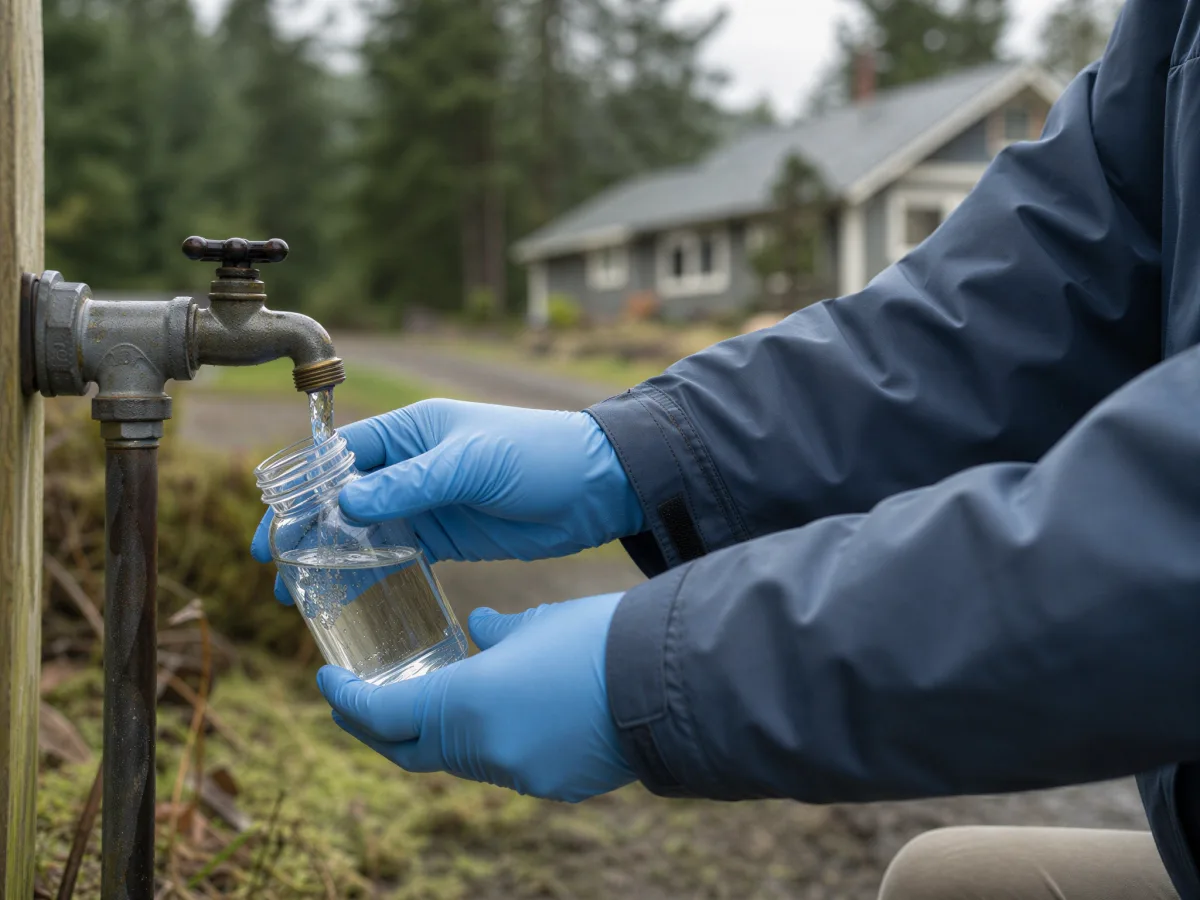
Why well testing matters
A public water system monitors its supply. A private well owner arranges testing. EPA does not regulate individual private wells.
Groundwater can carry bacteria or naturally occurring minerals. Runoff can introduce other contaminants. Flooding and septic problems can change the risk.
Read EPA private-well guidanceBacterial water testing
Labs often test total coliform and E. coli. These organisms can reveal a possible contamination path.
Septic failures and sewage overflows are common sources. Animal waste and runoff can also affect a well. Flooding can create new pathways.
Build the testing scope
Share the well age and type. Note any nearby septic system. Mention recent flooding or changes in taste and odor. Bring prior lab results.
Total coliform and E. coli can point to a problem. SafeNest may recommend more investigation.
Agriculture and livestock can shape the testing plan. Drainage also matters.
Location and property history may support tests for specific chemicals.
SafeNest explains the purpose and limits of each result.
Questions about well water testing
SafeNest currently focuses on private wells. Call us before scheduling a municipal-water project. We can help identify the right authority.
The well history shapes the panel. Common tests include total coliform, E. coli, and pH. Local risks may support tests for metals or pesticides.
Labs use total coliform and E. coli as indicators. A lab cannot test every possible pathogen in one screen. SafeNest uses the result to plan the next step.
Septic failures and sewage overflows are common sources. Animal waste and runoff can also affect a well. Flooding can create new pathways.
Yes. Clear water can contain indicator bacteria. Taste and odor cannot settle the question. A lab test can detect indicator bacteria.
Test after flooding or well repairs. Test after a septic problem. Contact your local health authority for routine testing guidance.
SafeNest reviews the lab report. We explain each result. We then discuss the next step.
Bring the property history. Bring prior results. Tell us what caused the concern.