
Find the moisture source
SafeNest looks for the condition that supports mold growth.
Mold testing · Spokane
SafeNest starts with a visual inspection. We use those observations to select each sample.
When to consider an inspection
Mold concerns often start with moisture. Odor and staining can also point to a problem.
Why mold testing matters
Water can move behind walls and under floors. A surface can dry while nearby materials stay wet. SafeNest uses inspection and testing to define the problem.
SafeNest looks for the condition that supports mold growth.
Targeted samples can show where the concern appears in tested areas.
SafeNest connects the lab data to the inspection findings.
Follow-up inspection and testing can document conditions after cleanup.
What an inspection may include
Each property is different. SafeNest reviews the history and visible conditions. We then choose the useful methods.
We check for moisture, water damage, odor, staining, and visible growth.
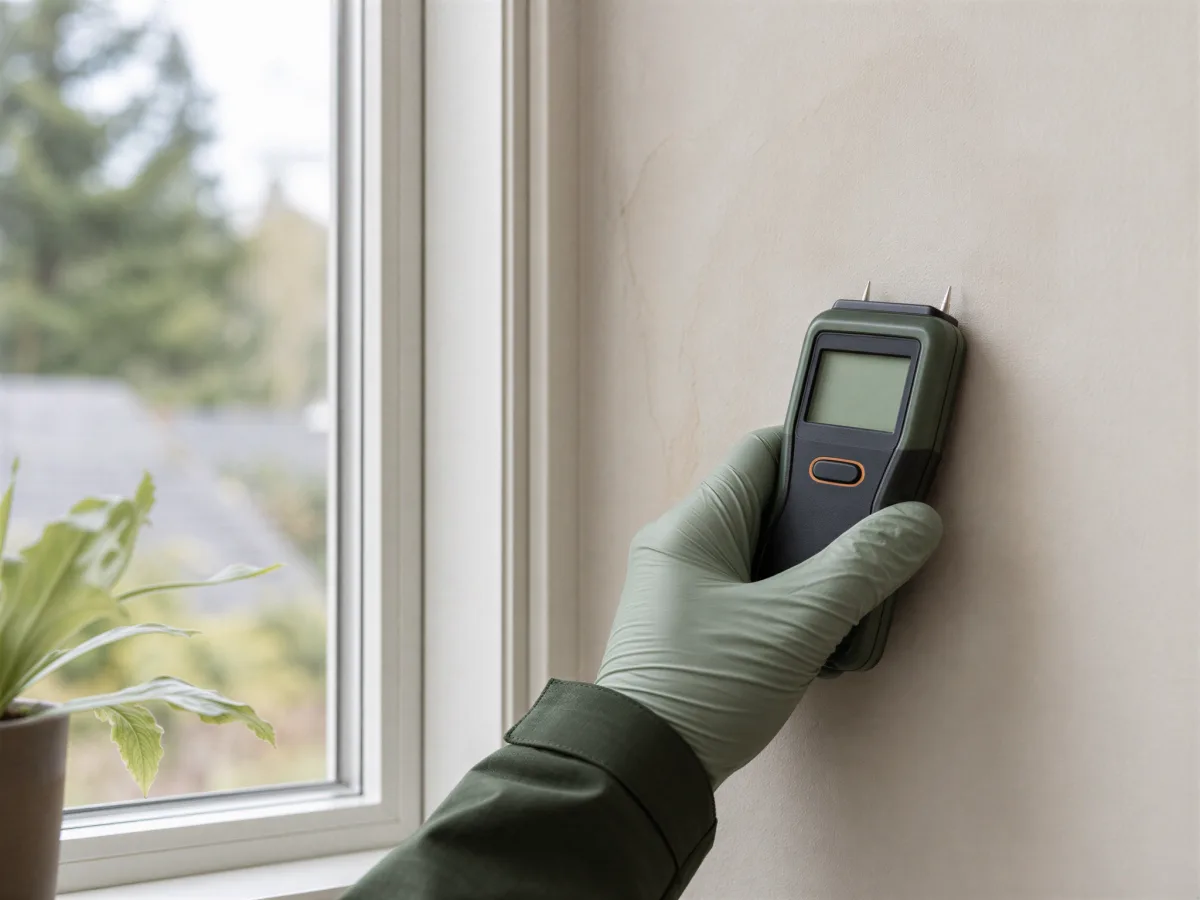
We screen for temperature patterns. We also take direct moisture readings.
SafeNest chooses the sample type. Options include air, tape, swab, bulk, and wall-cavity samples.
SafeNest reviews the lab report. You get an explanation in plain language.
Questions about mold testing
No. SafeNest inspects every project. We use the inspection to choose sample types and locations. Some projects need surface or bulk samples instead.
SafeNest reviews the property history. We look for moisture intrusion, odor, staining, and visible growth. We may use thermal imaging and direct moisture readings.
SafeNest may collect air, tape-lift, swab, bulk, or wall-cavity samples. We send each sample to a laboratory. The project question determines the sample type.
The laboratory report names the mold types found. It also reports measured concentrations. SafeNest explains how the results fit the property.
Yes. SafeNest inspects the property after cleanup. We can test the defined work area. The report documents the conditions at that time.
SafeNest provides inspection and testing. Hire a remediation contractor for cleanup.
Tell us about the property. Point out each area that concerns you. SafeNest will choose the next step.